
A cow bleeding out, captured 2025. Workingman’s Death 2005.
Located in Rivers State, Port Harcourt is Nigeria’s petrochemical hub, with the country’s two largest state-owned oil refineries producing 210,000 barrels per day (BPE, n.d.). As a result of this oil dominance, Port Harcourt is also home to many other supporting industries such as chemical processing, glass production, and tire manufacturing, among others. These industries feed off each other, making Rivers State, home to Port Harcourt, one of the wealthiest in the country.
Rivers State’s wealth is reflected in its demographics, with a poverty headcount of around 24% in 2018-2019, significantly lower than Nigeria’s average of 40.1% (NBS, 2019). However, this income-derived poverty rate masks the much larger multidimensional poverty rate, which takes into account health, education, and standards of living. By this metric, Rivers State was found to have a multidimensional poverty rate of around 62% in 2022 (Okojie, 2023). It’s reasonable to assume this rate was similarly high, if not worse, in 2004 when the documentary was shot. It is within the context of this poverty that we explore the open-air butchers in Port Harcourt’s Trans-Amadi slaughterhouse, known to locals as the Slaughter Market.
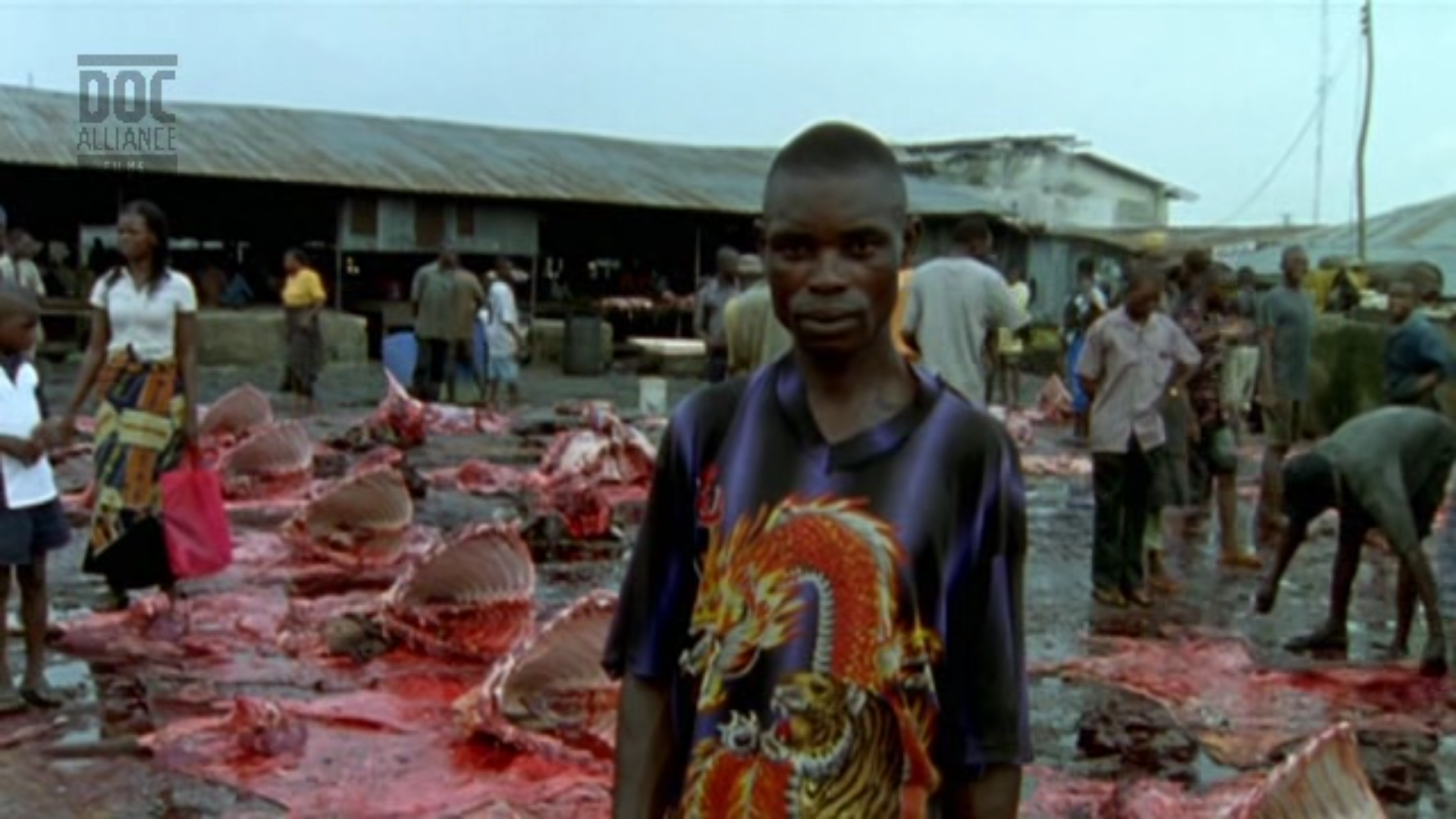
The main slaughter floor, captured 2025. Workingman’s Death 2005.
In the early morning hours, a mountain of cattle horns reveals what transpired the day before, and what is to come. We are introduced to Ishaq Mohammed, the butcher. Wielding two knives, he moves from one goat to another, slicing their necks as they are held down. Most bleed out in a few seconds. But the occasional unlucky one has to endure minutes of slow death, its neck gashed open, but a major artery missed. Sitting down for the camera, Ishaq seem unfazed by all the death, instead taking pride in the fact that on good days, they manage to slaughter up to 350 goats. After the goats are killed, they are roasted on tire fires, the roasters appearing unconcerned with the contamination or pollution emanating from the burning tires (Nwankwo et al, 2017). Among the black tire smoke, screams of dying goats, and blood-covered ground, the roasters find time to joke among themselves, aware of the job’s grim nature, but thankful that it provides for their family. After the roasting, the goats are scrubbed clean and sold.
Under the dull gray clouds of an overcast morning, the cattle are herded onto the killing floor. There’s certainly a lot more fanfare surrounding their slaughter, with a band of men singing the praises of the head butcher as he sharpens his knives. Prospective buyers are already pouring into the killing floor, eyeing the healthiest-looking animal. Men tie ropes around the hind legs and neck, then run in opposite directions to trip the cow and expose their necks to the butcher’s blade. A quick slice does the job, with geysers of blood pouring out in waves. With the sheer volume of blood exiting their necks, it’s surprising to see them hold on to life for so long. The cattle are butchered on the spot, their organs spilling out across the mud and blood-soaked floor. Heads are roasted and scrubbed, skins are kept for leather, and what is left of the cattle is bought by customers. Slabs of meat, alive only a few hours ago, are carried to the trunks of waiting cars, ready to feed a family.
It would be dishonest of me to pretend I didn’t experience any revulsion or anger at the slaughter of animals. The slow and agonizing deaths of some of them, especially the cattle, were difficult to watch. Bound up and upside down, their eyes looked about in confused terror, only for the light to slowly fade as the blood drains from their necks. However, my intention is not to cast judgment on those trying their best to survive, as it’s clear the men here are limited in their opportunities and education. And neither opportunity nor education can be developed when the basic necessities of life are not guaranteed. One such necessity is housing, and in the process of researching for this essay, I came to realize that it is exactly this basic right that has been repeatedly violated in Port Harcourt.
For the last two decades, the governors of Rivers State, Rotimi Amaechi (2007–2015) and Nyesom Wike (2015–2023), have overseen a concerning trend of forced evictions in Rivers State, particularly in Port Harcourt. The majority of the evictions coincide with the Greater Port Harcourt City Master Plan, announced in 2008. While precise figures are hard to come by, it is estimated that around 0.5–1.5 million people live in informal settlements along different banks scattered throughout Port Harcourt, commonly referred to as waterfronts. A small number of these waterfronts, housing approximately 200,000 people, were deemed to be blocking the Greater Port Harcourt City Master Plan.
In 2008, the local government began the eviction process on four major streets: Bonny Street, Creek Road, Gambia Lane, and Anyama Street. Satellite imagery indicates that these evictions achieved limited success (UN-Habitat, 2010).
In 2009, approximately 17,000 residents in the Njemanze waterfront were evicted with only one week’s notice. This was followed by another 15,000–20,000 residents in Abonnema waterfront in 2012, some of whom had moved in after the Njemanze demolitions. When their homes were demolished, most Abonnema Wharf residents were not offered any compensation, alternative housing, or even emergency shelter. In addition, the demolitions were carried out during the rainy season, making it difficult to relocate and find shelter. According to UN-Habitat, the demolition of both the Njemanze and Abonnema waterfronts was part of a larger plan involving the construction of the nearby Silverbird Showtime cinema (Amnesty International, 2012). Another round of evictions occurred in the Diobu region in 2022, leaving 2,000 people homeless (Amnesty International, 2022). Some of the residents were compensated for their losses in a court ruling, but such compensation is often insufficient to help them rebuild their lives (Nigeria Housing Market, 2022).
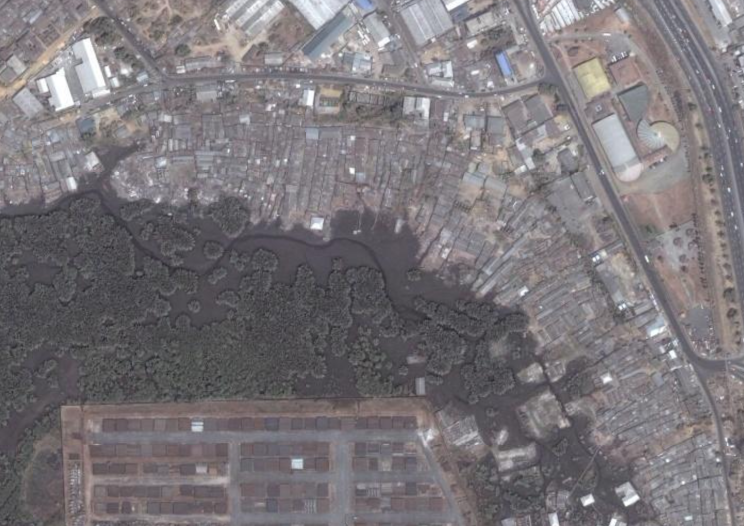
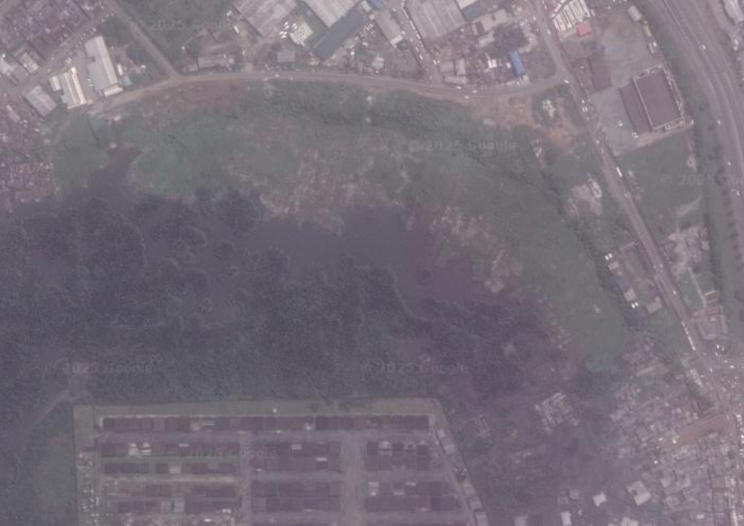
Demolition of Niemanze waterfront, captured 2008 and 2014.
4°47’05N 7°00’05E. Google Earth 2025
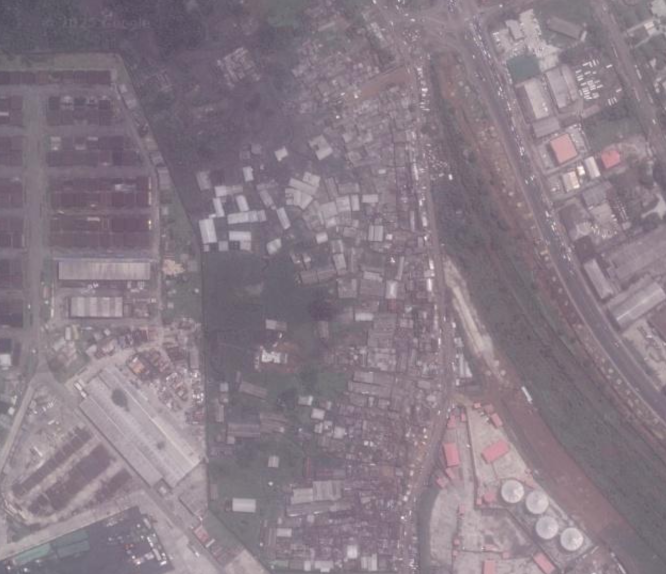
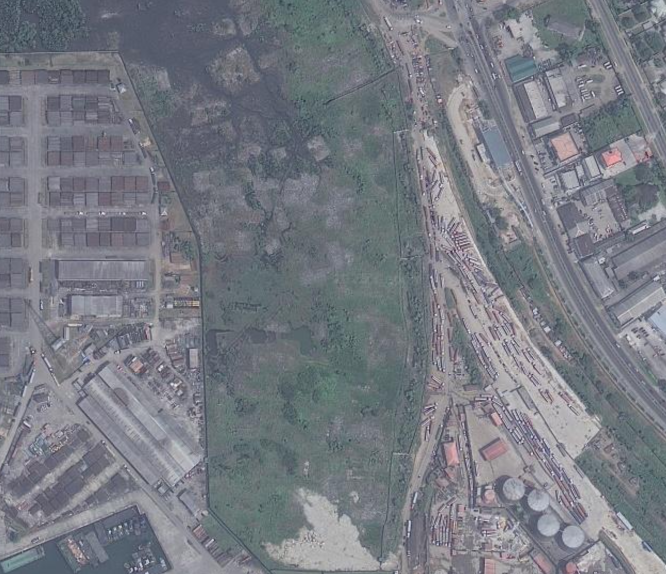
Demolition of Abonnema waterfront, captured 2011 and 2013.
4°46’49N 7°00’15E. Google Earth 2025
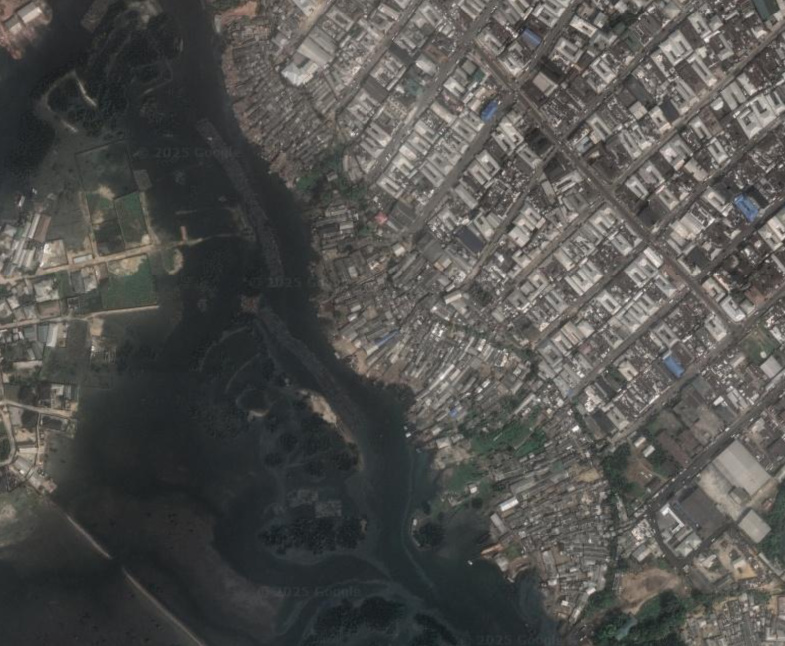
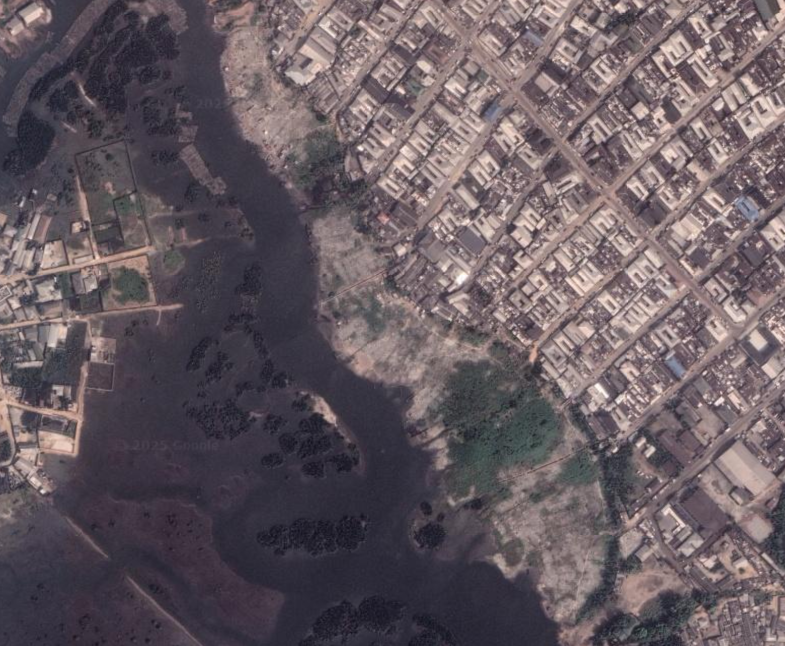
Demolition of Diobu waterfront, captured 2021 and 2022.
4°47’02N 6°59’25E. Google Earth 2025
It is here that our story wraps back around to the Slaughter Market. After being shut down during the COVID-19 pandemic as part of Nigeria’s restrictions on wet markets (Orient Daily News, 2023), the site was eventually demolished in 2021 and replaced with a supermarket. Soon after demolition, Governor Nyesom Wike approved the construction of a new abattoir across the city, fully compliant with modern health and safety standards. The new slaughterhouse will be able to process up to 400 cattle per day, as well as 1500 goats/sheep, far exceeding anything the Slaughter Market was capable of (Atlantic Post, 2021). Ironically, I am not sure whether this constitutes an upgrade. Perhaps some things should never be sanitized, lest we forget what they really are.
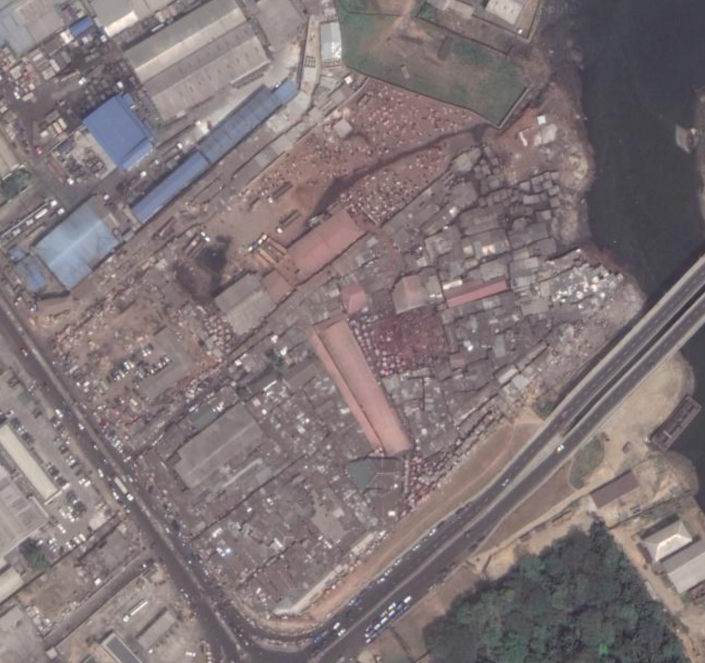
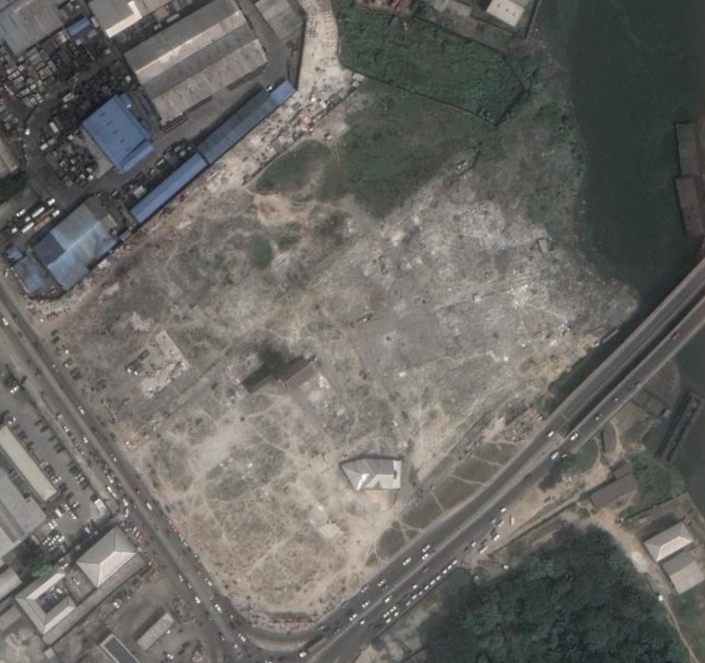
Demolition of Trans-Amadi slaughterhouse, captured 2019 and 2021.
4°48’52N 7°02’41E. Google Earth 2025
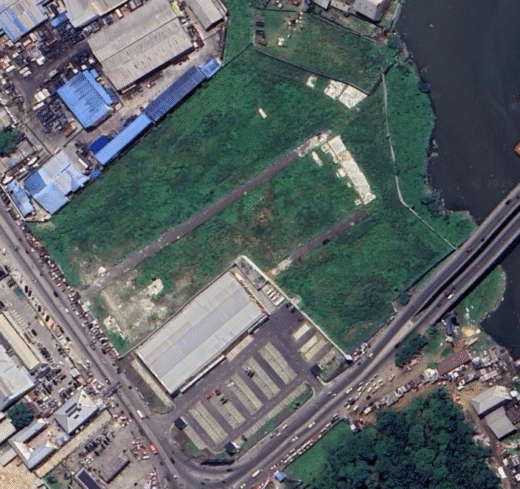
Hypercity supermarket, captured 2025.
4°48’52N 7°02’41E. Google Earth 2025
References
Bureau of Public Enterprises (n.d.). Port Harcourt Refining Company Limited (PHRC). [online] BPE. Available at: https://www.bpe.gov.ng/port-harcourt-refining-company-limited-phrc/ [Accessed: 16 July 2025].
National Bureau of Statistics (2019). Poverty and Inequality in Nigeria 2019 : Executive Summary. [online]. Available at: https://www.nigerianstat.gov.ng/elibrary/read/1092 [Accessed: 16 July 2025].
Okojie, K. (2023). Multidimensional poverty: Akwa Ibom, Rivers lead South‑South states with most poor people. [online] BusinessDay. Available at: https://businessday.ng/business-economy/article/multidimensional-poverty-akwa-ibom-rivers-leads-south-south-states-with-most-poor-people/ [Accessed: 16 July 2025].
Nwankwo, O.E., Nwankwo, N.C. and Nwoke, M.B. (2017). Implication of roasting goats with tyre on human health and the environment in Abakaliki, Ebonyi State, Nigeria. [online] Longdom. Available at: https://www.longdom.org/open-access/implication-of-roasting-goats-with-tyre-on-human-health-and-the-environment-in-abakaliki-ebonyi-state-nigeria-40473.html [Accessed: 16 July 2025].
UN-Habitat (2010). Evictions And Demolitions In Port Harcourt. [online]. Available at: https://mirror.unhabitat.org/downloads/docs/10010_1_593998.pdf [Accessed: 17 July 2025].
Amnesty International (2012). Nigeria: Forced evictions of Abonnema Wharf Waterfront: “Pack and go!”. [online] Amnesty International. Available at: https://www.amnesty.ch/fr/themes/pauvrete-et-droits-humains/ex-pauvrete-et-droits-humains/bidonvilles-expulsions-forcees/docs/2012/expulsions-port-harcourt/Nigeria.%20Forced%20evictions%20of%20Abonnema%20Wharf%20Waterfront.%20Pack%20and%20go-%20July%202012.%2028%20p..pdf [Accessed: 16 July 2025].
Amnesty International (2022). 60,000 forcibly evicted in Port Harcourt. [online] Amnesty International UK. Available at: https://www.amnesty.org.uk/files/2022-02/UA01022.pdf?VersionId=INLOHb5CHjwbZE8NoKGhRO9BQzjwcffC [Accessed: 16 July 2025].
Nigeria Housing Market (2022). Court orders Rivers State government to pay ₦11 billion compensation for unlawful demolitions. [online]. Available at: https://www.nigeriahousingmarket.com/real-estate-news-nigeria/court-orders-rivers-state-government-to-pay-11-billion-compensation-for-unlawful-demolitions [Accessed: 16 July 2025].
Orient Daily News (2023). Rivers finally closes down Trans-Amadi slaughter market. [online]. Available at: https://orientdailynews.com/rivers-finally-closes-down-trans-amadi-slaughter-market/ [Accessed: 16 July 2025].
Atlantic Post (2021). Gov Wike gives reasons for Oginiba slaughter market demolition, rules out ethnic/religious motive. [online]. Available at: https://atlanticpostng.com/gov-wike-gives-reasons-for-oginiba-slaughter-market-demolition-rules-out-ethnic-religious-motive/ [Accessed: 17 July 2025].